





- EDITIONS:
 Spanish News Today
 Alicante Today
 Andalucia Today
PROPERTY SEARCH

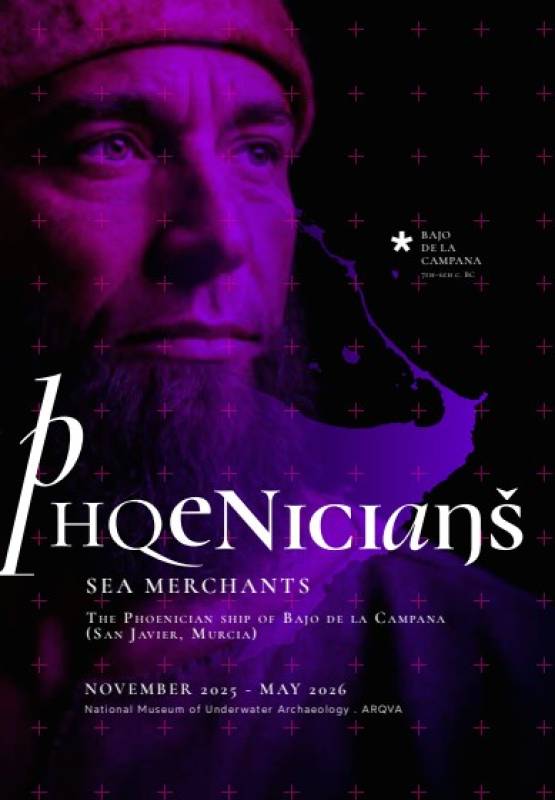
Until May 24 San Javier Phoenician shipwreck exhibition at the ARQVA museum in Cartagena
Fenicios, Mercaderes del Mar show some of the items found on board the Bajo de la Campana wreck which was found off the coast of La Manga
 The ARQVA national museum of underwater archaeology in Cartagena is holding a special exhibition concerning the Phoenician shipwrecks found off the coast of the Region of Murcia until 24th May, with special emphasis on the wreck known as the “Bajo de la Campana”.
The Spanish national archaeology museum, or ARQVA, which is located on the seafront in the city of Cartagena, is holding an exhibition of items related to the Phoenician culture of 3,000 years ago until 17th May, illustrating the seamanship and trading activities of the people who travelled the Mediterranean through items discovered in shipwrecks along the Murcia coastline.
 The Phoenician culture started over three thousand years ago in present-day Lebanon, as their ships began to reach ports all over the Mediterranean and trade in artefacts and ideas which transformed the cultures of the places they colonised. Thanks to them, the Mediterranean became an area of continuous exchange and the Iberian Peninsula, rich in metals, became part of these routes connecting east and west.
The Phoenicians brought not only exotic products, but also technical and cultural knowledge, including theirgreat legacy: the alphabet.
The underwater site of Bajo de la Campana, which was discovered close to La Manga del Mar Menor, bears witness to their, consisting of a 7th/6th-century BC shipwreck which, after decades of research, has revealed a valuable collection of materials. Among them are elephant tusks with Phoenician inscriptions, awls and other tools, pine nuts, almonds, olives, sets of weights, bronze elements belonging to a bed, ballast stones, amphorae, a lantern, copper and tin ingots and personal paraphernalia such as lice combs, as well as a stone pedestal.
Three of the six Phoenician shipwrecks so far identified and confirmed have been found of the coast of Murcia, two in Puerto de Mazarrón and the Bajo de la Campana one in the municipality of San Javier. This last one is larger and has a richer cargo than the other two, and it was fully excavated between 2007 and 2011.
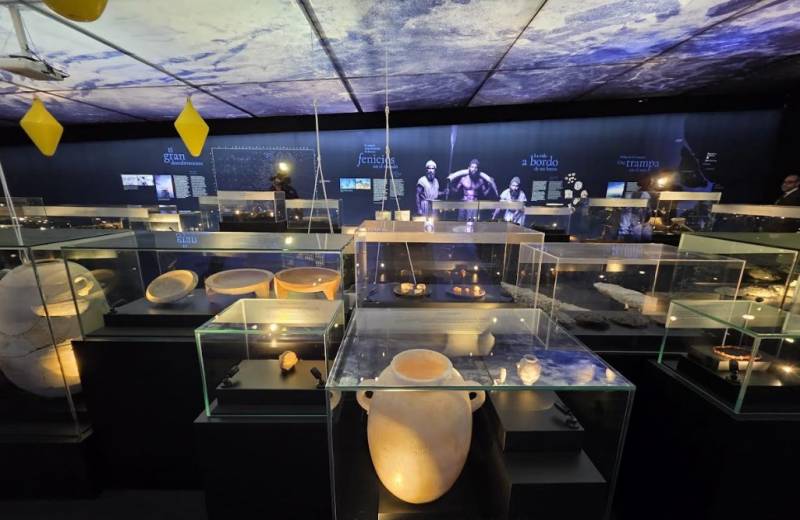 The ship measured between 15 and 20 metres in length and was designed to sail long distances, a feat made possible by the Phoenicians' seafaring expertise and astronomical knowledge. Their coastal settlements, such as the city of Cadiz, founded by people from Tyre, marked the beginning of a new era of contact and prosperity on the Iberian Peninsula.
For more local events, news and visiting information contact the tourist offices of San Javier (main contact number 661 572285) or go to the home page of San Javier Today.