



- EDITIONS:
 Spanish News Today
 Alicante Today
 Andalucia Today

PROPERTY SEARCH

Spain urged to follow Scotland's lead and make swift nest bricks mandatory in all buildings
Ornithologists are pushing for Spain to follow Scotland's lead and make swift nest bricks a legal requirement in new buildings
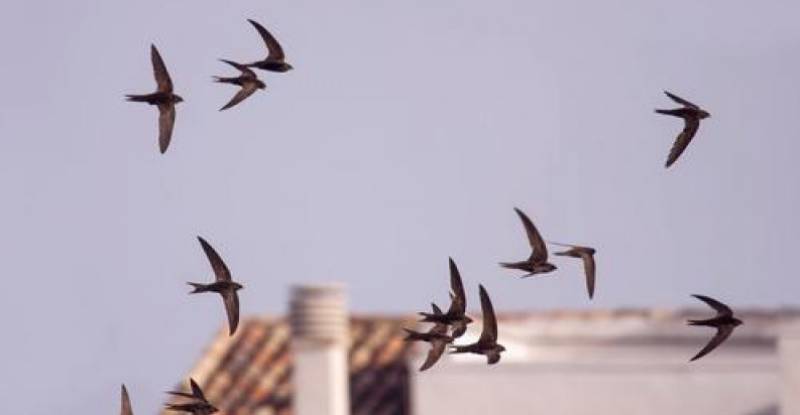
The common swift, known scientifically as Apus apus, has seen its population fall dramatically over the past two decades. According to data from the Royal Society for the Protection of Birds, breeding pairs in the UK dropped from nearly 150,000 to fewer than 90,000 in just 20 years, a decline of around 40%, and the picture in Spain is similarly worrying.
The species now appears on the Red Book of Birds as Vulnerable and ornithologists say the main reason for the collapse is that swifts are losing the places they nest.
Unlike most birds, swifts don't build nests in trees. Instead, they return each year from their winter in Africa to the exact same gap or cavity in a building where they've bred before, often for their entire lives.
The problem is that those gaps are disappearing fast. Energy-efficient renovations, crack sealing and building demolitions are all quietly wiping out nesting spots, leaving birds that have returned thousands of miles to find their home simply no longer exists.
The solution, now mandatory in Scotland, could also come to the rescue in Spain. A swift brick is a standard building block, made from concrete or terracotta, with a small hollow cavity inside and a narrow slot on the outside just big enough for a swift to slip through. They're fitted into the upper sections of a building's facade during construction or renovation, sit flush with the rest of the wall and require no maintenance whatsoever.
They don't affect insulation, structural integrity or energy efficiency in any way. Each one reserves a cavity of around 10.5 cubic centimetres, which is all a swift needs.
The Scottish Parliament has passed a reform requiring all new buildings to include swift brick openings in their facades, making it the first part of the UK to make this a legal requirement and putting it ahead of most of Europe on urban wildlife protection.
Now Spanish ornithologists and conservationists want to see the same thing happen here.
SEO/BirdLife, Spain's leading bird conservation organisation, has been pushing for swift-friendly construction to become a legal requirement under the Spanish Building Technical Code, covering both new builds and energy-efficient renovation projects.
Back in 2023 the organisation published a technical guide and a catalogue of solutions aimed at architects and developers, setting out practical and cost-effective ways to incorporate bird shelters into building facades without any significant impact on design or budget.
With spring just around the corner and swifts due to start arriving back in Spain from around March onwards, conservationists say there really is no better time to start planning for the future of this species.
Image: SEO/BirdLife