







- EDITIONS:
 Spanish News Today
 Alicante Today
 Andalucia Today

PROPERTY SEARCH

Meet the lemurs of Terra Natura Murcia: the charismatic stars of Madagascar
With their expressive eyes, ringed tails and sociable nature, lemurs are among the most fascinating primates you can see at the park
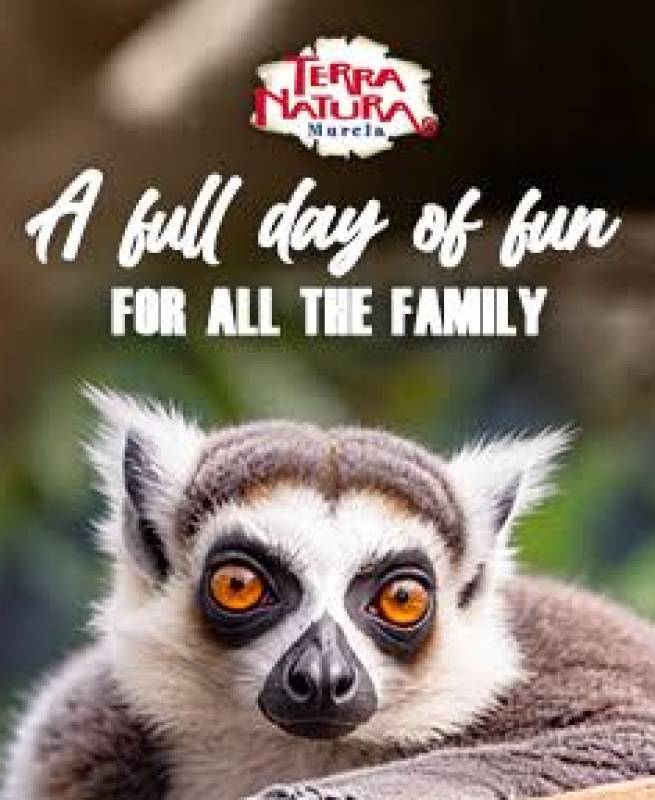
Few animals stop people in their tracks quite like a lemur. Instantly recognisable, endlessly watchable and full of personality, these remarkable primates are one of the undisputed highlights of a visit to Terra Natura Murcia, and there's far more to them than their striking good looks.
Lemurs are found naturally only on Madagascar, the island off the east coast of Africa, making them one of the most distinctive and geographically unique animals on the planet. Medium-sized and wonderfully agile, they're best known for their long tails, which in many species carry that unmistakable pattern of black and white rings. Their fur ranges from grey and brown to reddish and whitish depending on the species, and their eyes have an almost unnervingly expressive quality that makes them very easy to anthropomorphise. Seeing them up close at Terra Natura Murcia is a different experience entirely from a photograph or a wildlife documentary.
Smarter than they look
One of the things that sets lemurs apart from other primates is their exceptionally well-developed sense of smell. Rather than relying primarily on sight or sound, lemurs use scent to communicate, mark territory and recognise members of their own group. It's a subtle but fascinating aspect of their behaviour that becomes more apparent the longer you watch them, and the lemur enclosure at Terra Natura Murcia gives visitors plenty of opportunity to do exactly that.
Their diet is broadly omnivorous, taking in fruit, leaves, flowers, bark and the occasional small insect, which allows them to adapt to whatever their environment offers across different seasons. They also play a quietly important ecological role: as they move through the forest eating fruit, they disperse seeds and help regenerate the vegetation around them.
Family life and early development
Lemurs are deeply social animals, and that group dynamic is central to how their young develop. A single offspring is most common, though twins do occur in some species. For the first weeks of life, infants cling closely to their mother, gradually learning to move, feed and interact with the group. It's one of those genuinely moving wildlife moments, and one that Terra Natura Murcia's commitment to animal welfare helps make possible.
Habitat loss in Madagascar makes conservation work increasingly urgent. Parks like Terra Natura Murcia play a real and meaningful role in protecting species that face growing pressure in the wild, and the lemurs are a perfect example of why that work matters.
Well worth a visit to see for yourself.
Click here for more information about Terra Natura Murcia
Image: Terra Natura Murcia