





- EDITIONS:
 Spanish News Today
 Alicante Today
 Andalucia Today

PROPERTY SEARCH

Mar Menor recovery shows promise, but ministers warn progress will take time
Early signs of improvement are encouraging, yet scientists and officials stress patience and sustained action
 “The complete recovery of the Mar Menor takes time.” That is the clear message from the regional Minister for the Environment, Juan María Vázquez, who says new scientific data offers reasons for cautious optimism, but also underlines that the lagoon remains a fragile ecosystem requiring constant care.
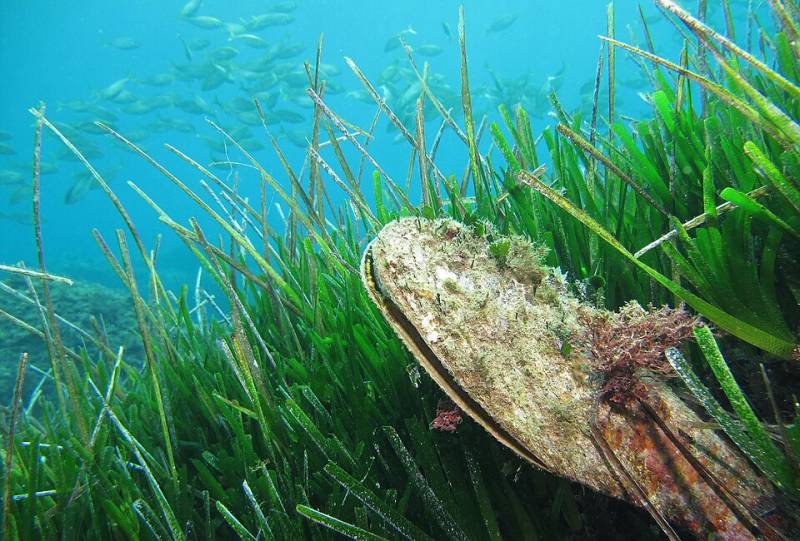
Speaking in an interview, Vázquez explained that the Mar Menor is showing objective signs that “encourage optimistic caution,” particularly when it comes to underwater vegetation. He pointed to the most recent mapping by the Spanish Institute of Oceanography, IEO-CSIC, which confirms early signs of seagrass regeneration inside the lagoon. These findings support earlier observations made by the Murcian Institute of Agricultural and Environmental Research and Development.
“That said, full recovery requires time and, above all, a sustained reduction in nutrient inputs,” the minister warned. He stressed that the regional government is committing all available human and financial resources to that goal, strengthening technical teams and improving on-the-ground coordination. “We’re not talking about declarations,” he said. “We’re talking about constant work, planning, scientific monitoring and concrete actions to protect the lagoon and its surroundings.”
The priority, according to Vázquez, is to ensure that any improvement seen in environmental indicators is consolidated. “The most pessimistic observers had written it off,” he said, “and now we’re seeing that the seagrass meadows of the saltwater lagoon are regenerating. We must be doing something right.”
Those early improvements follow months of monitoring that suggested the Mar Menor was beginning to stabilise after years of ecological decline.
Even so, researchers remain careful. A study published last December by the IEO-CSIC confirmed that the ecosystem is still “profoundly altered” following the 2016 collapse, when extreme turbidity wiped out around 85 percent of benthic vegetation. However, for the first time since then, scientists observed initial recovery in the two marine angiosperms present, Cymodocea nodosa and Ruppia cirrhosa (both types of seagrass that grow on the lagoon floor and are vital for water quality and marine life).
Alongside scientific monitoring, the regional government has continued to invest heavily in restoration and protection measures.
At the same time, officials acknowledge that long-term pressures have not disappeared. Recent research has highlighted previously unknown sources of contamination within the lagoon system, underlining why recovery remains complex and uncertain.
Finally, Vázquez highlighted the Region of Murcia’s recent decision to join the International Union for Conservation of Nature. He described it as a chance to align local policies with international standards and strengthen cooperation with scientists and governments worldwide, while keeping the Mar Menor firmly on a slow but steady path towards recovery.
Image: wikicommons