







- EDITIONS:
 Spanish News Today
 Alicante Today
 Andalucia Today

PROPERTY SEARCH

La Cresta, Isla del Fraile: An Águilas dive site of rocky mazes and resident groupers
From shallow seagrass meadows to a dazzling 17-metre ridge, this Águilas dive site has it all
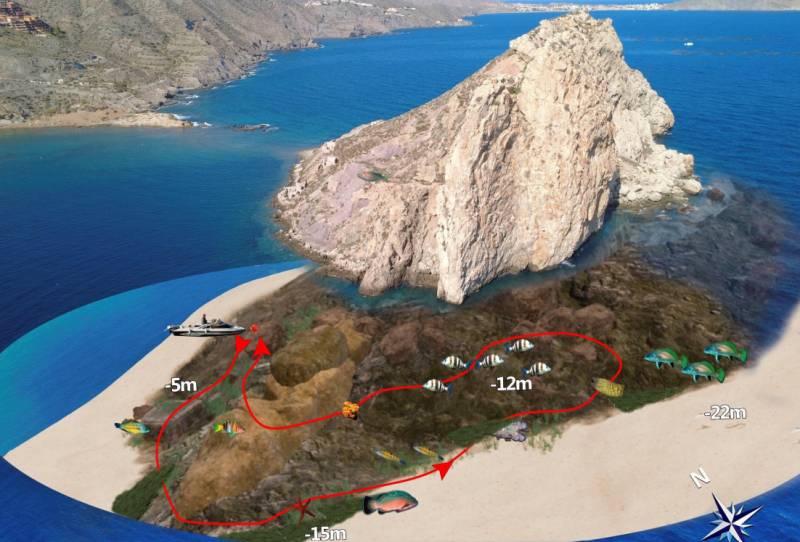
Off the coast of Águilas, the waters around Isla del Fraile hide one of the area's most rewarding dive routes, known as La Cresta. The dive starts at a buoy, where you descend to a bright seabed around 5 metres down, scattered with medium-sized stones and thick beds of Posidonia seagrass.
From there, the route follows the island's headland round to the other side, gradually dropping deeper as it heads towards the point. Along the way divers can expect to spot combers and wrasses tucked among the rocks, along with shoals of shy croakers darting in and out of view.
Before long you'll reach a rocky ridge, the crest that gives the dive its name, which can be followed in a southwesterly direction. It sits on a sandy bottom that reaches around 17 metres at its deepest point. Beyond it lies a maze of large rock formations that's well worth taking slowly, with plenty of spots to pause and look out for groupers resting in the open or moray eels hiding in crevices coated in false coral.
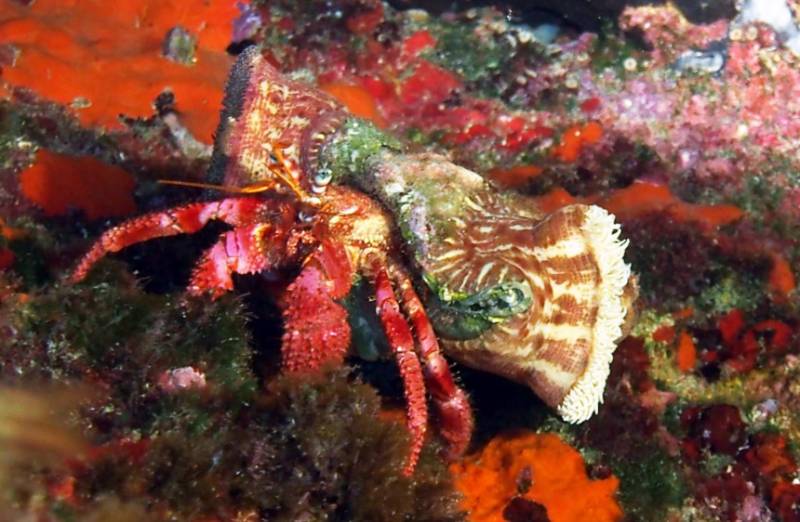
 Look closely at the rock face and you'll likely spot small, brightly coloured nudibranchs such as Hypselodoris elegans, often hanging around the sponges that cover sections of the reef. Keep an eye out too for hermit crabs carrying anemones on their shells, a partnership that works well for both sides as the crab gets extra protection from the anemone's sting while the anemone gets a free ride to new feeding grounds.
The return leg retraces the route back to shallower water, though there's still plenty to catch the eye on the way up. According to local diving guides, the western slope of Isla del Fraile shows off its most dramatic rock formations right near the dive's starting point, making it a striking spot to begin and end the trip.
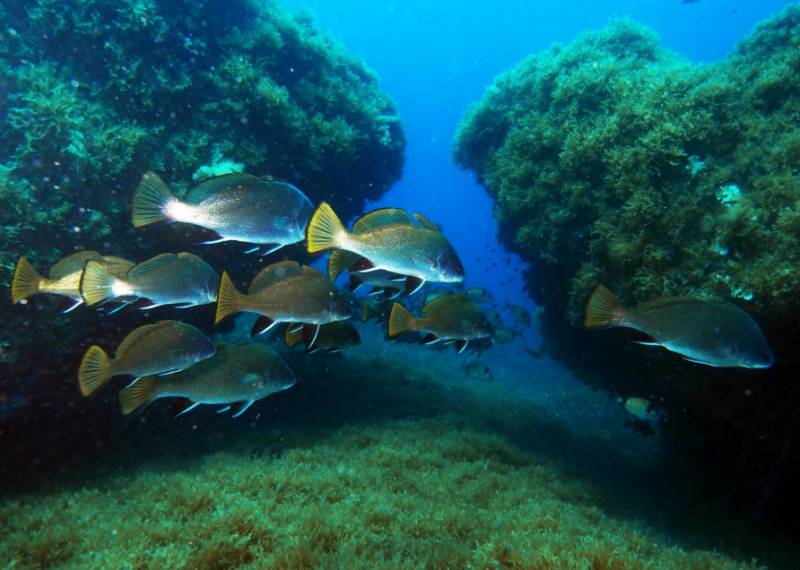
 Among the marine life regularly spotted here is the brown meagre, a commercially valuable species that tends to gather in groups near crevices and becomes most active after dark, hunting small fish, crustaceans and worms. Divers might also come across the Discodoris atromaculata nudibranch, nicknamed the "Swiss cow" for its spotted pattern, a shell-less mollusc that relies on chemical defences and bold colouring to ward off predators.
Click for Águilas Tourist Information Office.
Click the link to see full information about the municipality of Águilas in English: ÁGUILAS TODAY