



- EDITIONS:
 Spanish News Today
 Alicante Today
 Andalucia Today
PROPERTY SEARCH

PROPERTY SEARCH
Dive beneath Águilas' iconic Hornillo Pier and discover a hidden underwater world
Built to load iron ore more than a century ago, the Embarcadero del Hornillo has become a thriving habitat for marine species
(Click for the full history of Águilas)
Few landmarks are as closely associated with Águilas as the Hornillo Pier, or Embarcadero del Hornillo as it is officially known. Standing proudly over the Mediterranean for more than a century, the striking iron structure is one of the town's most recognisable sights.
What many visitors don't realise, however, is that beneath the historic pier lies one of the area's most interesting and accessible diving sites.
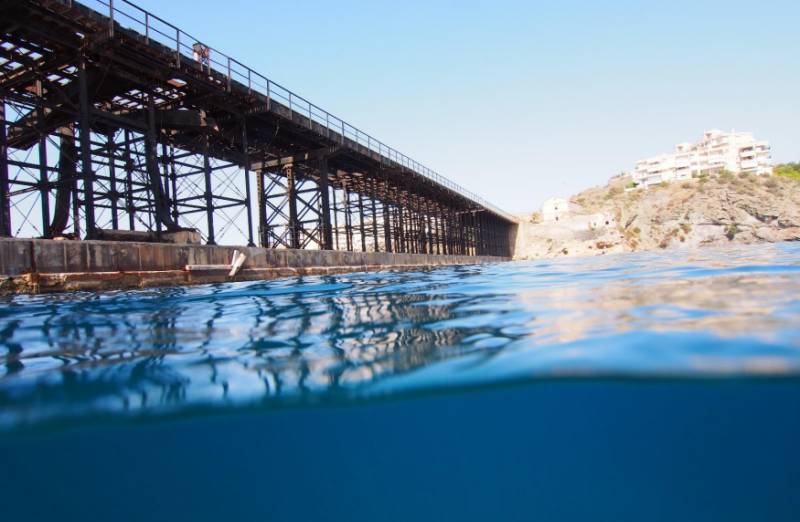
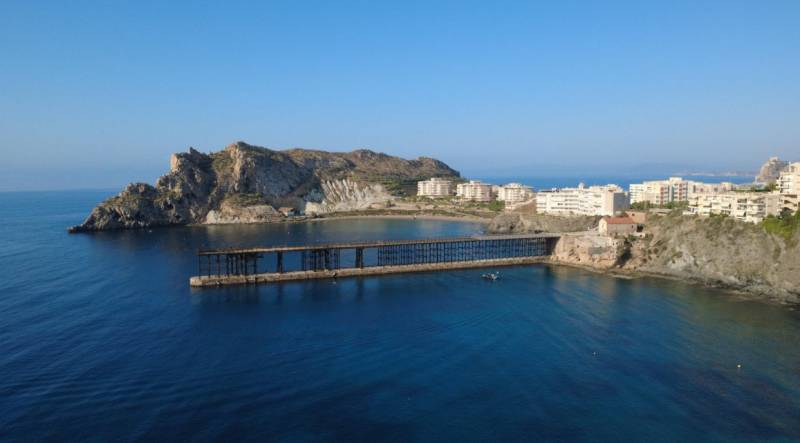 Originally built during the Industrial Revolution and brought into service in the early 20th century, the Hornillo Pier was used to load iron ore onto waiting ships. Today, its impressive stone foundations and surrounding seabed provide a unique underwater environment where history and marine life exist side by side.
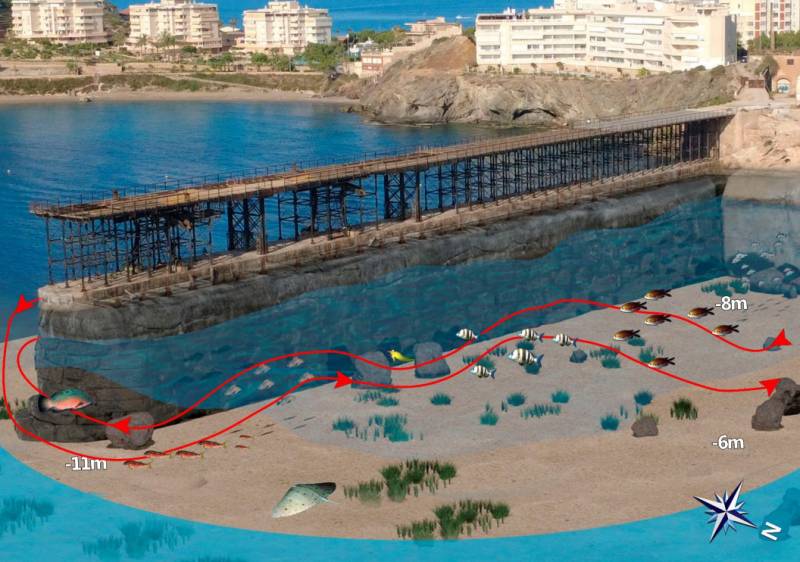
The site can be reached from the shore via either Hornillo Beach or Los Cocedores del Hornillo Beach, although many divers prefer to arrive by boat and enter the water directly above the dive area. Access is straightforward, making it suitable for divers of all experience levels.
Unlike many traditional reef dives, the Hornillo experience centres around the large masonry blocks that support the pier. These huge stones are covered in red and brown algae and are riddled with cracks and crevices that provide shelter for a surprising variety of marine creatures.
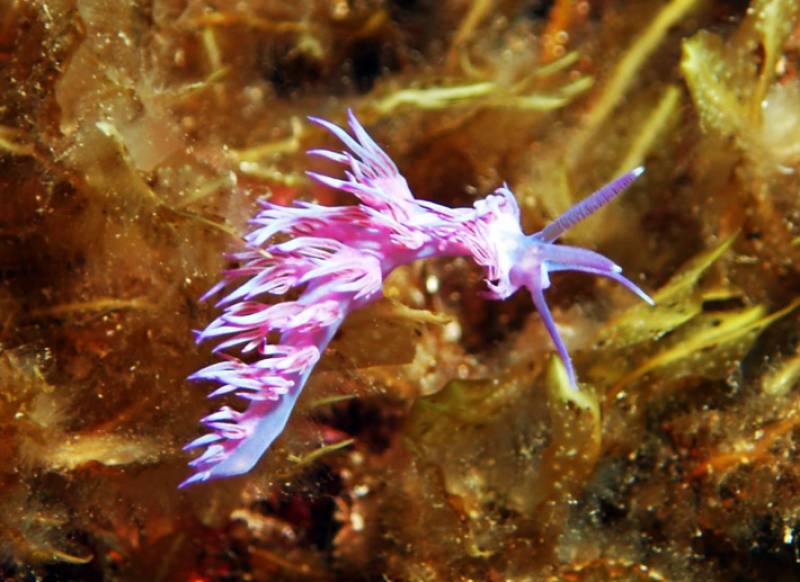
Gobies and blennies dart between the rocks, while small octopuses often hide among the gaps. Moray eels can occasionally be spotted peering out from their rocky homes, and attentive divers may also encounter colourful nudibranchs. These small sea slugs lack protective shells and rely on their bright colours to warn potential predators.
 The stone walls attract an abundance of fish life. Schools of damselfish are common, while white seabream, annular seabream, wrasse and combers are frequently seen patrolling the area. Divers may also be lucky enough to spot croakers, easily recognised by their distinctive golden fins.
The seabed surrounding the pier offers even more opportunities for wildlife encounters. Meadows of Cymodocea seagrass provide an important habitat for many species, while the sandy areas nearby are home to creatures specially adapted to blend into their surroundings.
Flatfish can often be found partially buried in the sand, almost invisible until they move. Divers may also encounter the striking razor wrasse, known locally as the raor, a species that favours soft-bottom environments.
Adding to the underwater spectacle are starfish and sabellas, delicate marine animals that resemble flowers as they extend their feathery crowns into the water to filter food particles from the current.
 Navigation is simple, with divers able to follow the line of the wall while exploring the many nooks and crannies that support such a rich variety of life. The combination of easy conditions, fascinating history and abundant wildlife makes the Hornillo Pier one of the most distinctive dive sites along the Águilas coastline.
For anyone looking to experience a different side of this famous landmark, a dive beneath the Hornillo Pier reveals a hidden world that most visitors never get to see.
Click for Águilas Tourist Information Office.
Click the link to see full information about the municipality of Águilas in English: ÁGUILAS TODAY