







- EDITIONS:
 Spanish News Today
 Alicante Today
 Andalucia Today

PROPERTY SEARCH

Benidorm and Valencia using phone tracking and AI to tackle beach overcrowding
Councils across the Valencian Community are using live data to monitor crowded beaches and tourist hotspots
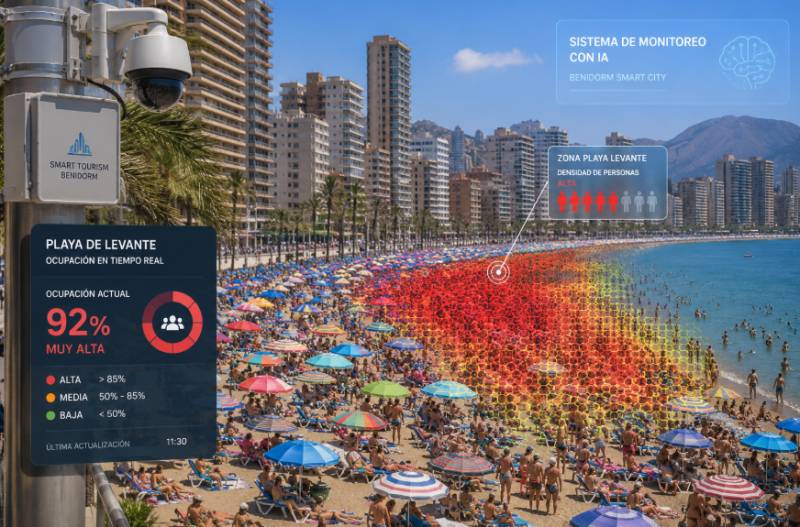 If you’ve ever arrived at a packed beach in Benidorm, spent 20 minutes hunting for parking in Alicante or found yourself shoulder-to-shoulder with tourists in Valencia’s old town, there’s a good chance technology may soon be keeping tabs on exactly how busy things are getting.
Tourist destinations across the Valencian Community are increasingly turning to so-called “smart tourism” systems to monitor crowds in real time, with local councils using mobile phone signals, sensors and AI-powered cameras to better manage overcrowding.
Essentially, the authorities want to know when beaches, promenades, historic centres and beauty spots are getting too busy so they can react faster and avoid chaos during the busiest periods of the year.
Benidorm has become one of the key testing grounds for this type of technology, alongside places like Altea and Valencia city.
One of the companies involved is Castellón-based Nealis, which has been showcasing its systems at the Digital Tourist conference held in Benidorm, an event focused on how technology is changing tourism across Spain.
Rather than relying on guesswork or occasional headcounts, the systems use several different tools to estimate how crowded an area is at any given moment.
One method involves detecting anonymous signals emitted by mobile phones through Bluetooth and Wi-Fi. Phones don’t actually need to connect to any network for this to happen because devices constantly send out small signals unless they’re switched off or in airplane mode.
Combined with data from mobile operators and AI-powered cameras that count people and vehicles, councils can build a live picture of what’s happening in tourist hotspots.
In practical terms, this means that local authorities could know how many people are currently on a particular beach, how full a car park is or whether certain streets are becoming overcrowded.
The information is updated roughly every 30 minutes and can then be used to trigger alerts, warnings or even traffic-light style systems advising visitors whether an area is busy or not.
For tourist-heavy parts of the Costa Blanca, the technology could become increasingly important as Spain continues dealing with record visitor numbers.
Benidorm in particular has long marketed itself as one of Europe’s most technologically advanced tourist destinations and has spent years investing in “smart city” systems aimed at improving everything from traffic flow to beach management.
Supporters of the technology say it could help improve the experience for both tourists and residents by reducing congestion, improving safety and preventing overcrowding in sensitive areas.